

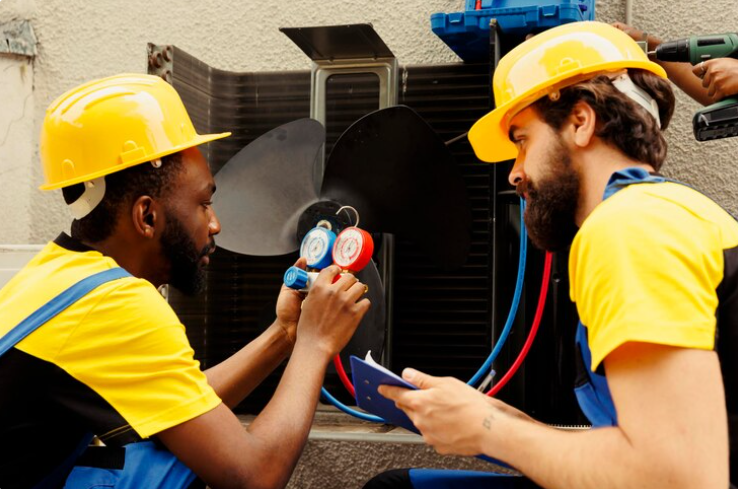
Large office buildings require HVAC systems that deliver consistent comfort, high efficiency, and long term scalability. Employees expect stable indoor temperatures and clean air throughout the workspace. At the same time, building owners must control operational expenses and manage energy consumption. Choosing the right system involves more than selecting equipment capacity. Modern HVAC systems for office buildings are engineered to balance comfort with cost efficiency.
Selecting the best commercial HVAC system requires careful evaluation of building size, occupancy patterns, and long term business goals. A properly designed system supports productivity while reducing strain on mechanical components. This guide explains the most effective HVAC systems for large office buildings and how to choose the right solution.
Common HVAC Systems for Office Buildings
Large office buildings typically rely on centralized HVAC systems capable of serving multiple zones across several floors. These systems must maintain steady airflow and temperature control despite fluctuating occupancy levels. The most widely used solutions include Variable Refrigerant Flow systems, rooftop units, chiller systems, and building automation technologies. Each option offers unique advantages depending on structural layout and cooling demands.
Understanding how these systems operate helps decision makers evaluate performance expectations. The right solution depends on balancing efficiency, maintenance needs, and operational flexibility. Careful planning ensures consistent comfort without unnecessary energy waste.
Variable Refrigerant Flow Systems
Variable Refrigerant Flow systems, often called VRF systems, are known for their flexibility and energy efficiency. These systems allow multiple indoor units to connect to a single outdoor unit while operating independently. This enables precise temperature control across different zones within the building. Offices with varying occupancy levels benefit from this adaptability.
VRF systems are especially effective in large office buildings with diverse workspace layouts. Their design reduces excessive ductwork and improves space efficiency. Because each zone operates independently, energy consumption can be adjusted based on actual demand. Over time, this leads to improved operational control and reduced utility expenses.
Rooftop Units
Rooftop units remain a common choice for many commercial office facilities. These systems are installed on the roof, which helps preserve interior space for business operations. Rooftop units often combine heating and cooling functions into a single packaged system. This simplifies installation and maintenance planning.
While rooftop units may not offer the same zoning precision as VRF systems, they provide dependable performance for many office configurations. They are often suitable for buildings with open layouts or uniform temperature needs. Proper sizing and airflow balancing are critical to ensure consistent performance across the facility.
Chiller Systems
Chiller systems are typically used in very large office complexes with significant cooling demands. These systems circulate chilled water through air handling units to regulate indoor temperatures. Chillers are capable of maintaining stable cooling performance across extensive square footage. Their centralized structure supports high capacity output.
Because of their scale, chiller systems require careful engineering and planning. When properly designed, they deliver reliable performance and long term durability. Integration with automation systems further enhances operational efficiency. Chillers are often preferred when consistent high volume cooling is required.
Building Automation Systems
Building automation systems enhance the performance of commercial HVAC equipment. These systems monitor temperature, humidity, and airflow in real time. Automated controls adjust system output based on occupancy and environmental conditions. This improves efficiency without sacrificing comfort.
Automation allows facility managers to track performance metrics and identify areas of energy waste. Remote monitoring capabilities also simplify troubleshooting and maintenance coordination. When integrated with advanced HVAC equipment, automation significantly improves system responsiveness and long term cost control.
Key Selection Factors for Large Office Buildings
Choosing the best HVAC system requires evaluating several important performance factors. Energy efficiency should remain a primary consideration since HVAC systems account for a large portion of building energy usage. Systems with high efficiency ratings reduce monthly operational expenses. Over time, these savings offset initial installation costs.
Zoning flexibility is another critical factor. Large office buildings often contain conference rooms, private offices, and open work areas with different temperature needs. Systems that allow independent zone control improve comfort while minimizing energy waste. Maintenance requirements must also be considered to ensure predictable service planning.
Long term operating costs play a central role in decision making. Equipment that requires frequent repairs can increase total ownership expenses. Professional HVAC Installation ensures that these factors are addressed during system selection and setup.
Energy Efficiency and Operating Costs
Energy efficiency directly impacts long term cost control. High efficiency compressors, variable speed fans, and intelligent controls reduce unnecessary power consumption. Advanced systems adjust output based on real time demand rather than operating at constant capacity. This reduces strain on components and extends equipment lifespan.
Reducing energy waste not only lowers expenses but also supports sustainability objectives. Office buildings benefit from stable indoor conditions without excessive utility bills. Careful system design ensures that efficiency goals align with building performance requirements.
The Importance of Professional Design
Proper system design ensures balanced airflow and accurate load distribution. Oversized systems may cycle too frequently, leading to inefficiency. Undersized systems struggle to maintain consistent temperatures. Accurate load calculations prevent these common issues.
Professional commercial HVAC system installation requires detailed evaluation of building layout and occupancy patterns. Ductwork planning, zoning configuration, and control integration must be aligned with performance goals. Working with experienced specialists ensures the system operates as intended from the beginning.
Arminco Air’s Office HVAC Expertise
Arminco Air specializes in designing and installing HVAC systems for large office buildings across Virginia, Maryland, and Washington DC. Their team conducts comprehensive evaluations to determine appropriate system capacity and configuration. This ensures accurate performance and energy optimization.
Businesses rely on Arminco Air for dependable commercial HVAC system installation and long term service planning. Their regional expertise allows systems to be tailored to local climate conditions. With structured maintenance support, office buildings maintain consistent performance year round.

Conclusion
Large office buildings require HVAC systems that combine comfort, efficiency, and scalability. Variable Refrigerant Flow systems, rooftop units, and chiller systems each offer distinct advantages. Building automation further enhances system performance through intelligent monitoring and control. Selecting the right system requires careful evaluation of efficiency, zoning, and long term operating costs.
Professional design and installation are essential for achieving consistent results. Accurate load calculations and strategic planning reduce future performance issues. Investing in expert guidance ensures that HVAC systems support productivity and operational stability. Request an HVAC system evaluation from Arminco Air to determine the best solution for your office building.